

Exhibitor and partner directory 2025
Welcome to the exhibitor and partner directory of IAA MOBILITY! All about exhibitors, partners, sponsors and products.


MAHLE
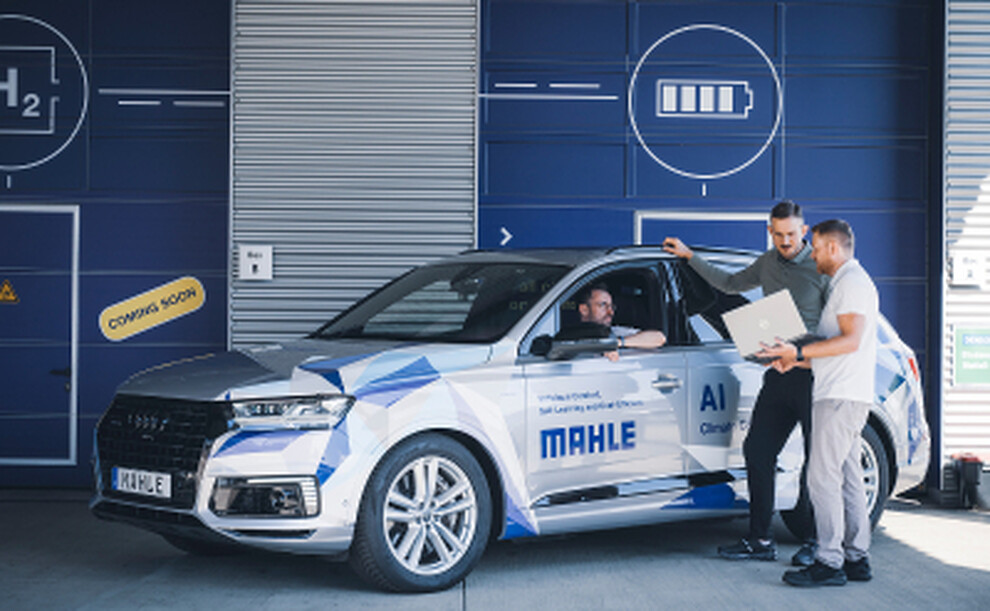
MAHLE A.I. Climate Control
The A.I. Climate Control software module from MAHLE controls the air conditioning system of a vehicle using artificial intelligence (AI). The system acquires information on the personal air conditioning wishes of vehicle occupants. For this purpose, users’ individual air conditioning settings are transferred to the cloud and merged with the current weather and user data of the vehicle sensors and the interior camera. This data record is used for training a personal digital twin. After a very short time, the MAHLE A.I. Climate Control adapts the air conditioning system to the individual preferences of users meaning that virtually no more manual interventions are needed. This approach results in energy savings as inefficient air conditioning settings are avoided. In addition, safety is improved as the driver is no longer distracted by the operation of the air conditioning system.
The module is rounded off by a smart voice control system. The module also detects the reasons for change requests by the user, such as exposure to sunlight. This information is processed by the digital twin and taken into account for future control operations.
The benefit of MAHLE A.I. Climate Control for customers is considerably improved air conditioning comfort. For automakers, the work needed for calibrating air conditioning systems at the production plant is reduced as they are continuously calibrated during vehicle operation.
The module is rounded off by a smart voice control system. The module also detects the reasons for change requests by the user, such as exposure to sunlight. This information is processed by the digital twin and taken into account for future control operations.
The benefit of MAHLE A.I. Climate Control for customers is considerably improved air conditioning comfort. For automakers, the work needed for calibrating air conditioning systems at the production plant is reduced as they are continuously calibrated during vehicle operation.